
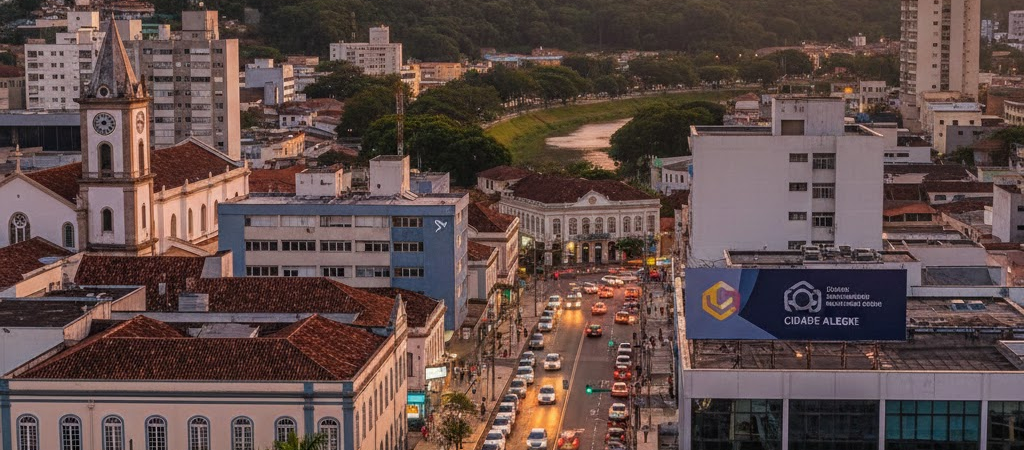
Medium-sized cities play a strategic and often underestimated role in Brazil’s territorial, economic, and social organization. Positioned between large metropolitan areas and small municipalities, these cities act as regional hubs that concentrate services, jobs, infrastructure, and opportunities. Understanding their role is essential to grasp how Brazil develops beyond its major capitals like São Paulo, Rio de Janeiro, and Belo Horizonte.
In a country marked by vast territory and strong regional inequalities, medium-sized cities help balance development, support surrounding municipalities, and create alternatives to excessive metropolitan concentration. Their influence extends to logistics, education, healthcare, industry, and quality of life, shaping how millions of Brazilians live and move across the national space.
What defines a medium-sized city in Brazil
There is no single official definition of a medium-sized city in Brazil, but most studies and public policies consider municipalities with populations between 100,000 and 500,000 inhabitants. Examples include cities like Ribeirão Preto, Uberlândia, Joinville, Campina Grande, and Londrina.
Beyond population size, medium-sized cities are characterized by their functional role. They offer services and infrastructure that go beyond local needs, serving entire regions. This includes hospitals of medium and high complexity, universities, shopping centers, industrial districts, and regional transport connections.
These cities often attract residents from nearby smaller municipalities who depend on them for work, education, healthcare, and commerce, creating daily and weekly flows that reinforce their regional centrality.
Medium-sized cities as regional economic engines
One of the main roles of medium-sized cities in Brazil is to act as economic engines for their regions. They host diversified economies that combine industry, services, agribusiness, logistics, and technology.
In agricultural regions, cities like Sorriso or Passo Fundo connect rural production to national and international markets. They concentrate warehouses, processing industries, financial services, and technical support, adding value to primary production.
In industrial and service-oriented regions, medium-sized cities attract companies seeking lower costs, less congestion, and better quality of life compared to large metropolitan areas. This dynamic helps decentralize economic activity and reduces excessive pressure on major capitals.
Reducing pressure on large metropolitan areas
Brazil’s largest metropolitan regions face chronic challenges such as traffic congestion, high housing costs, pollution, and social inequality. Medium-sized cities offer an alternative path for population and economic growth.
By absorbing part of the demographic expansion and attracting investments, these cities help slow down uncontrolled metropolitan sprawl. Many professionals and companies choose medium-sized cities for their balance between opportunity and quality of life, shorter commutes, and more accessible urban services.
This process contributes to a more polycentric urban network, where development is distributed across multiple centers rather than concentrated in a few megacities.
Centers for education and knowledge diffusion
Medium-sized cities play a crucial role in expanding access to education in Brazil. Many host federal and state universities, technological institutes, and private higher education centers that serve entire regions.
Cities like Viçosa, Santa Maria, and Mossoró are examples of how academic institutions can transform local economies, attract students from different states, and foster research, innovation, and cultural life.
The presence of universities also stimulates qualified job creation, entrepreneurship, and the circulation of ideas, helping retain young populations that might otherwise migrate to larger capitals.
Healthcare and public services hubs
In Brazil’s territorial organization, medium-sized cities often function as healthcare hubs. They concentrate hospitals, specialized clinics, and diagnostic centers that serve dozens of smaller municipalities.
This regional role is especially important in the Unified Health System (SUS), where patient flows are organized according to service complexity. Medium-sized cities reduce the need for long-distance travel to capitals, improving access to healthcare and reducing system overload.
The same logic applies to other public services, such as judicial courts, federal agencies, and technical assistance offices, which reinforce the administrative importance of these cities.
Infrastructure and connectivity nodes
Medium-sized cities are strategic nodes in Brazil’s transport and logistics networks. Many are located at crossroads of highways, railways, and, in some cases, regional airports.
Their logistical relevance supports the movement of goods, people, and information across regions. Cities like Uberaba or Maringá exemplify how connectivity enhances regional integration and economic competitiveness.
Digital infrastructure also plays a growing role. Medium-sized cities are increasingly important in expanding broadband access, data centers, and digital services to areas that would otherwise remain disconnected.
Social dynamics and quality of life
Compared to large metropolitan centers, medium-sized cities often offer better indicators of quality of life. Lower crime rates, more accessible housing, reduced commuting times, and closer social networks contribute to their attractiveness.
These cities tend to preserve a stronger sense of local identity while still offering urban amenities such as cultural events, restaurants, parks, and shopping areas. This balance makes them appealing to families, retirees, and remote workers.
However, growth also brings challenges. Urban planning, mobility, housing, and environmental sustainability require proactive policies to avoid reproducing the problems seen in larger cities.
Challenges faced by medium-sized cities
Despite their importance, medium-sized cities in Brazil face structural challenges. Rapid growth can strain infrastructure, public services, and local governance capacity.
Many depend heavily on a limited number of economic sectors, making them vulnerable to market fluctuations. Others struggle with informal urban expansion, insufficient public transport, and social inequality.
Effective planning, regional cooperation, and long-term investment strategies are essential to ensure that these cities continue to fulfill their integrative role without compromising social cohesion and environmental quality.
The future role of medium-sized cities in Brazil
As Brazil continues to urbanize and diversify its economy, medium-sized cities are likely to become even more relevant. They offer a scalable model of development that combines economic dynamism, regional integration, and improved quality of life.
Public policies that strengthen regional networks, encourage innovation, and improve governance can amplify their positive impact. By connecting rural areas, small municipalities, and metropolitan regions, medium-sized cities help build a more balanced and resilient national urban system.
In this sense, the role of medium-sized cities in Brazil goes far beyond their population size. They are key actors in shaping the country’s territorial cohesion, economic diversification, and social well-being in the decades to come.