
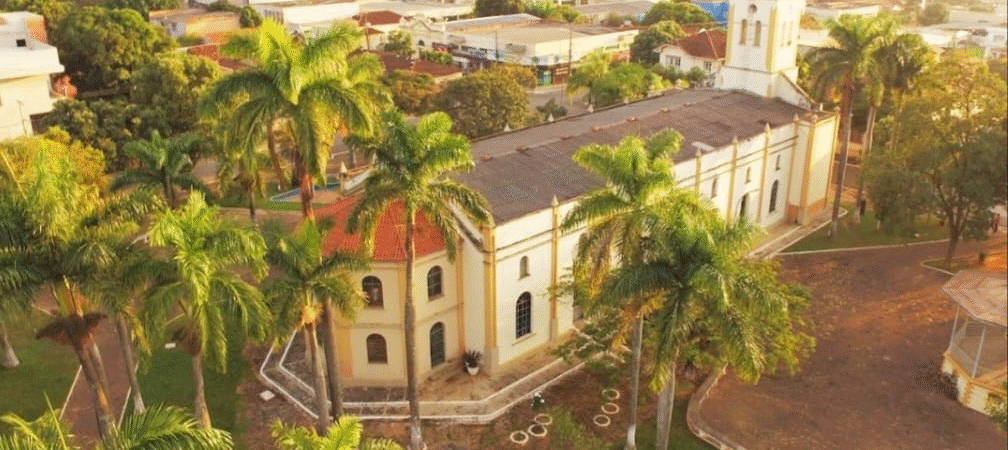
Journey to Abaeté, Minas Gerais. Explore its rich history rooted in the gold rush, the finding of the famous Diamante de Abaeté, the vibrant local culture, traditional festivals like Festa de Santo Antônio de Tabocas, and the natural beauty near the Represa de Três Marias and the Rio São Francisco. A genuine travel guide to this Brazilian heartland gem.
To arrive in Abaeté is to feel the pulse of the authentic Brazilian sertão (backlands) of Minas Gerais, a place where the landscape tells a story of discovery, resilience, and tradition. Located in the Central Mineira region, about 220 kilometers from the state capital, Belo Horizonte, Abaeté is much more than a quiet interior town. Its very name, derived from the Tupi language, means “strong man” or “true man”—a name that perfectly encapsulates the persistent, spirited character of its people and its history.
The city stands at a crucial geographical and cultural crossroads, deeply tied to the immense Rio São Francisco basin, one of the country’s most important waterways. It is a city forged by the dreams of diamond prospectors, the enduring strength of the cattle industry, and the simple, profound faith of its residents. It’s an invitation to step away from the major tourist routes and explore a community that has preserved its identity with a fierce, quiet pride, earning it the affectionate local moniker, Cidade Menina (Girl City).
The gleaming past: from gold seekers to the great diamond
The history of Abaeté, like that of many towns in Minas Gerais, sparkles with the allure of mineral wealth. The first non-indigenous settlers arrived around 1730, drawn by the prospect of gold and, more importantly, diamonds. The area quickly became known for its rich deposits, attracting garimpeiros (miners) who established a vibrant, albeit tumultuous, community. The town’s first name was the grand and winding title: Arraial Novo de Nossa Senhora do Patrocínio do Marmelada dos Olhos d’Água.
The city’s history was permanently marked in 1796 with the discovery of the legendary Diamante de Abaeté (Abaeté Diamond). This enormous stone, weighing a staggering 138 carats, was, at the time, the largest diamond ever found in Brazil, cementing the region’s fame on the global map of precious stones. This single discovery attracted further attention, both from adventurers and the Portuguese Crown, which sought to control the lucrative trade, leading to the establishment of military outposts to protect the transport of the precious cargo. Abaeté eventually achieved city status on November 5, 1877, officially taking the name of its original inhabitants, the Abaeté Indians, thus honoring the deep roots of the land.
Culture and tradition: the heartbeat of the abaeteense
The cultural life of Abaeté is vibrant, deeply connected to its agrarian roots and the traditions of the sertão. The community preserves a rich calendar of events, reflecting the characteristic spiritual and festive nature of the mineiro people.
Sacred celebrations: the feast calendar
Religious festivities are the cornerstones of the social year. The most important is the traditional Festa de Santo Antônio de Tabocas, celebrated every June 13th. This event draws pilgrims and visitors with a blend of solemn religious ceremonies, joyful street parties, and the ever-present barraquinhas (stalls) selling regional food and crafts. Another major celebration is the Festa de Nossa Senhora do Rosário, usually held on the second weekend of July. This festival, dedicated to Our Lady of the Rosary, often incorporates elements of Congado—an Afro-Brazilian religious and cultural manifestation—showcasing the syncretism of the local faith.
Local arts and artistic expression
Despite its size, Abaeté has a surprisingly strong connection to the arts. Known affectionately as Cidade Menina—a title that evokes purity and artistic flair—the town has nurtured a local arts scene. There are dedicated cultural spaces, such as the Escola de Artes Cidade Menina and the Espaço Cultural Renato Andrade, which foster local talent. This dedication to artistic expression adds an unexpected layer of sophistication to the town’s rugged backlands profile.
The flavors of the sertão: gastronomy
The local cuisine is rustic and rich. Abaeté is famous throughout the region for the high quality of its artisanal baked goods—think the famous pão de queijo (cheese bread), roscas (sweet breads), and local cakes—often prepared from secret, family recipes. Dining out offers traditional mineiro dishes, heavy on pork, chicken, corn, and beans, complemented by fresh, locally sourced ingredients. The Saturday Feirinha de Abaeté (Little Fair) is a must-visit, a lively market where local producers sell homemade delicacies, fresh produce, and unique handicrafts.
The economic shift: from mining to cattle king
After the fever of the diamond rush subsided, Abaeté successfully transitioned its economy to focus on its most reliable resource: the fertile soil and vast grazing lands of the cerrado (savanna). Today, the city’s economy is dominated by the agro-industry and services sector, with a deep specialization in ranching.
The cattle empire
Abaeté is widely recognized as a major center for pecuária (livestock) in Minas Gerais. The large-scale cattle ranching operation drives a significant portion of the local wealth. This strong agrarian foundation is celebrated annually during the Expô Abaeté in July, a major agricultural fair that highlights the fusion of economic activity and social tradition.
The nexus of the Rio São Francisco
The local economy also benefits significantly from its proximity to the Represa de Três Marias (Três Marias Dam) and the Rio São Francisco. While the river provides water for irrigation and supports the vast ranching operations, the dam’s reservoir has also opened up opportunities for fishing, aquatic sports, and related tourism services.
Tourism and nature: the beauty of the waters
For the nature enthusiast, Abaeté offers a blend of waterscapes and rugged cerrado terrain, perfect for outdoor activities and relaxation.
Rivers, reservoirs, and waterfalls
The city is part of the Circuito Turístico Lago de Três Marias (Três Marias Lake Tourist Circuit), leveraging the vastness of the reservoir for leisure activities. Visitors can easily arrange passeios de barco (boat trips) on the Rio São Francisco, providing a unique perspective of the landscape and the traditional life of the ribeirinhos (riverine people).
The surrounding nature also offers spectacular retreats, such as the Cachoeira do Quati (Quati Waterfall). This regional attraction features a beautiful waterfall, clean air, and trails for walking, cycling, and contemplation. The regional mountains, like the Serra do Capacete and Pedra-Menina, offer additional opportunities for light trekking.
Urban leisure and relaxation
Within the city, the beautiful main squares—such as Praça Dr. Amador Álvares (the Mayor’s Square) and the square surrounding the Igreja Matriz de Nossa Senhora do Patrocínio (Mother Church)—serve as the social hubs. These areas, complete with bandstands and seating, are where locals gather to savor the slow, deliberate pace of interior life. The Mother Church itself is an important historical and religious symbol, reflecting the Baroque influence often found in Minas Gerais architecture.
Conclusion: the strong heart of minas
Abaeté, the “Land of the Strong Man,” lives up to its name. It is a city that has harnessed the lessons of its tumultuous mining past and channeled that pioneering spirit into building a flourishing agro-industrial center. It successfully balances its deep-rooted traditions and religious devotion with a forward-looking economic approach based on its rich land and natural resources.
For the adventurous traveler, Abaeté is an immersive experience. It offers not only the chance to stand near the mighty Rio São Francisco or visit a picturesque waterfall but also the opportunity to connect with a community that is genuinely proud of its heritage. From the massive diamond that defines its past to the cattle that sustain its present, and the cultural festivals that enrich its future, Abaeté offers a quintessential and memorable journey into the strong, true heart of Minas Gerais.