
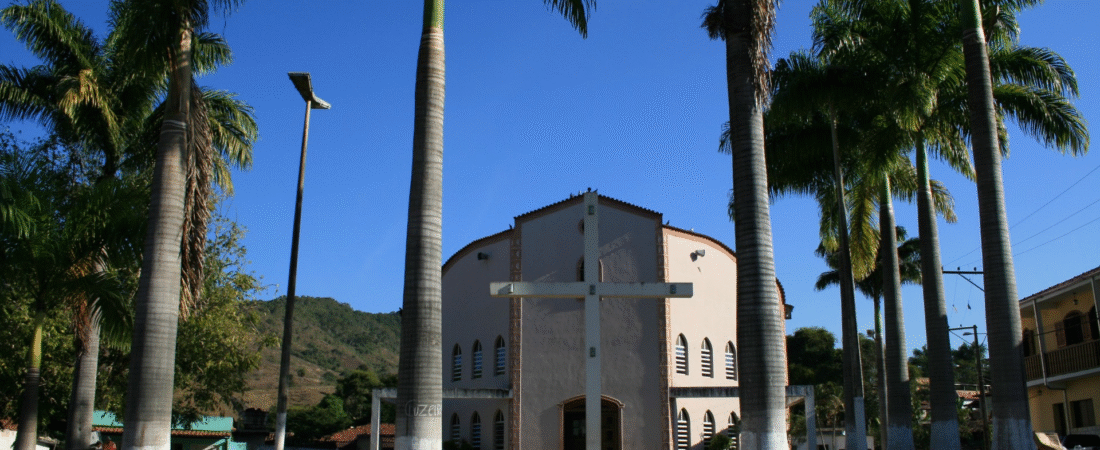
Discover Acaiaca, Minas Gerais, a small, charming city known as the “Little Princess of Zona da Mata.” Explore its history linked to gold exploration, its Tupi origins (meaning “Brazilian cedar”), cultural life centered on the historic Train Station, and natural attractions like the Catarata. Part of the Estrada Real tourist route.
Acaiaca is a small, charming municipality nestled in the Zona da Mata region of Minas Gerais. Lying approximately 154 km from the capital, Belo Horizonte, it is known for its well-maintained streets and preserved traditions, earning it the affectionate nickname: Princesinha da Zona da Mata (Little Princess of the Zona da Mata).
The city is steeped in history and legend. Its name, Acaiaca, has Tupi origins, deriving from Acaiacá, which means “Brazilian cedar”—a sacred tree for the original indigenous peoples, the Botocudos. A fascinating curiosity about the name, which locals proudly share, is that “Acaiaca” is a palindrome: it reads the same backward and forward. The city is officially part of the Estrada Real (Royal Road) route, specifically the Caminho dos Diamantes (Diamond Way), reflecting its past links to colonial gold and diamond exploration.
History: from gold explorers to emancipation
The history of Acaiaca dates back to the early 18th century, a period marked by the Portuguese push into the interior in search of precious minerals.
The spiritual and colonial foundation
The town’s foundational milestone occurred in 1727 with the construction of the first chapel dedicated to São Gonçalo, initiated by Father Miguel Rabelo Alvim on his farm. During the 19th century, the growing settlement went through several names, including Ribeirão Abaixo and Barra do Carmo, before being elevated to a parish in 1839 with the construction of the church dedicated to Nossa Senhora da Conceição.
The name was officially changed to Acaiaca in 1923, a tribute to the sacred tree of the region’s indigenous past. The town finally achieved political emancipation on December 30, 1962, separating from the historical municipality of Mariana, a moment that marked its administrative autonomy.
Legend of the sacred cedar
A local legend connects the city’s name to an ancient indigenous myth near the Arraial de Tejuco (today Diamantina). The story recounts that after a great flood, a single couple survived by climbing a huge cedar tree called Acaiacá. They later repopulated the earth, making the tree sacred. When white settlers cut down the sacred tree, a tremendous storm erupted, leading to a fatal struggle among the tribe. After the storm, diamonds began to appear among the ashes of the tree, giving a mythical explanation for the region’s mineral wealth.
Culture, music, and traditions
Acaiaca maintains the strong, conservative traditions typical of the interior of Minas Gerais, with culture and faith playing central roles.
Cultural hubs and expressions
The cultural life of the community often revolves around the historic Estação Ferroviária (Train Station). Although the tracks have been removed, the station building has been preserved and revitalized as a cultural center, often hosting saraus (literary and musical gatherings), exhibitions, and presentations. It also houses the municipal library, providing a focal point for the city’s intellectual and leisure activities.
A key cultural asset is the Banda Sagrado Coração de Jesus (Sacred Heart of Jesus Band). This traditional musical ensemble is a source of great local pride, performing classical and popular music and maintaining a school to train new musicians, keeping the city’s musical tradition alive.
Festivals and community life
The city has a rich calendar of religious and folk events. One of the most important is the annual Encontro Anual de Folia de Reis (Annual Meeting of the Three Kings Procession), which attracts groups from various regions of the state. Another significant community celebration is the religious and folk festival of Nossa Senhora do Rosário (Our Lady of the Rosary), held in September, which provides a perfect opportunity to experience the collective identity of the acaiaquense people.
Economy and natural beauty
While historically linked to the gold and diamond rush, Acaiaca’s modern economy is stable and focused primarily on agriculture.
Dairy and pastureland
The main source of income for the residents is pecuária de leite (dairy farming). The municipality is located in an area with extensive pastureland, making milk production the dominant economic activity. This economic specialization maintains the area’s strong connection to rural, agrarian life.
Natural attractions
Acaiaca is integrated into the Circuito Turístico Serras de Minas (Minas Mountain Range Tourist Circuit) and offers several points of natural interest:
- Catarata ou Cachoeirinha: A beautiful local waterfall and small swimming area, perfect for a refreshing dip, picnicking, and enjoying the clean, natural environment of the surrounding mountains.
- A barrinha: A popular spot along the local river with many stones where residents and visitors gather to enjoy the scenic view and the cool water.
The city’s location in a mountainous region with green areas provides numerous opportunities for hiking and enjoying stunning vistas, reflecting its nickname as the “Little Princess of the Zona da Mata” due to its cleanliness and well-preserved natural and urban environment.
Conclusion: a heritage preserved
Acaiaca is a jewel on the Estrada Real, a small community that lives up to its mythological name, which symbolizes both natural beauty (cedar tree) and historical depth (the source of diamonds). It is a city that successfully preserves its tranquility and traditions, centered on strong faith, local music, and an agricultural economy.
For travelers seeking an authentic experience of the Minas Gerais countryside, away from the crowds of larger historical cities, Acaiaca offers a serene welcome. Its unique palindromic name, its historic train station turned cultural center, and the simplicity of its daily life make it a truly memorable stop in the heart of the Zona da Mata.