
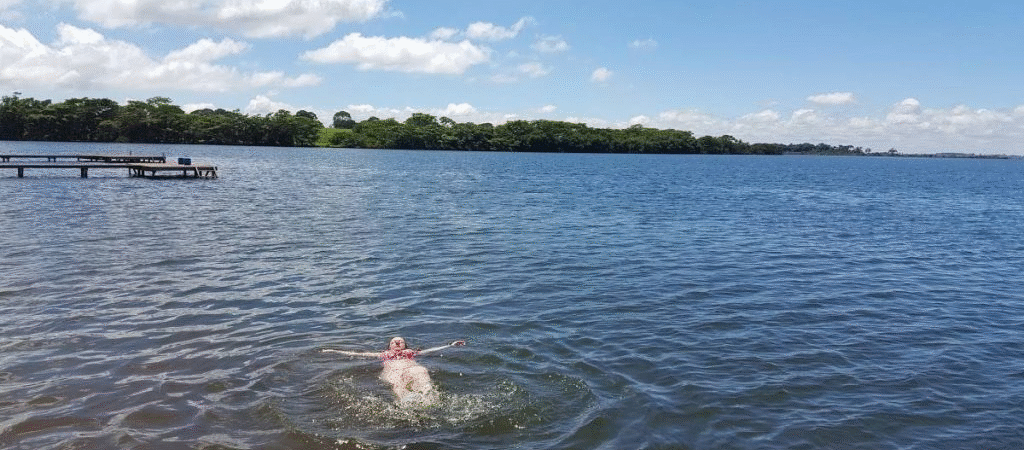
Discover Água Comprida, a small and charming city in the Triângulo Mineiro. Known for its strong agricultural economy (sugarcane and soy), its privileged location on the Rio Grande, and its integration into the Circuito Turístico dos Lagos. Explore the Igreja Matriz de São Sebastião and the peaceful rural environment.
Água Comprida, which translates to “long water,” is a small, welcoming municipality located in the Mesorregião do Triângulo Mineiro e Alto Paranaíba in Minas Gerais. Situated approximately 525 km from the state capital, Belo Horizonte, the city is a classic representation of the tranquility and strong agricultural tradition of this region.
The city gets its name from the local stream, the Córrego Água Comprida, but its hydrographic importance is amplified by its proximity to the Rio Grande and its integration into the Circuito Turístico dos Lagos (Lakes Tourist Circuit), an area known for the vast reservoirs created by hydroelectric dams. With a small population and a large territorial area, Água Comprida offers a peaceful, rural experience surrounded by fertile lands and an extensive Cerrado biome.
History: from a humble heritage to a farming center
The history of Água Comprida is closely tied to the colonization and development of the fertile lands of the Triângulo Mineiro.
The founding of the patrimônio
The origins of the city are traced back to the donation of land for the establishment of a religious heritage. The historical narrative points to the initiative of a community to construct a chapel, a common starting point for many cities in the region. The donation of land for the patrimônio (heritage site) was formalized in 1939.
The first chapel was inaugurated in 1942, and the urbanization of the surrounding area began shortly after, with the demarcation of streets and the construction of houses.
Emancipation and the new name
The growing settlement, initially known as Patrimônio de Água Comprida, was elevated to a district of Uberaba in 1949. Led by community efforts, the district finally achieved political emancipation on December 12, 1953, becoming the municipality of Água Comprida. This separation from Uberaba solidified its identity as an autonomous center, primarily focused on the development of its rich agricultural resources.
Economy: the power of the land
The economy of Água Comprida is remarkably robust for its small population size, reflecting the productivity of the Triângulo Mineiro.
Agricultural strength
The main economic activities are services, small industries, and, predominantly, agriculture. The soil is known to be highly fertile, leading to high agricultural production. Key crops include:
- Sugarcane (cana-de-açúcar): A major commodity in the Triângulo Mineiro region.
- Soybeans (soja): Another highly produced cash crop.
- Livestock (pecuária): The municipality maintains a significant cattle herd.
This strong agrarian base gives the city a high per capita gross domestic product (PIB per capita), underscoring the wealth generated by its productive lands.
Tourism and attractions: peace and reservoirs
Água Comprida is not a destination for bustling historic attractions, but rather for those seeking peace, rural tourism, and natural spaces connected to the region’s hydrographic network.
Spiritual and civic centers
- Igreja Matriz de São Sebastião: The current main church, built after the original chapel, is a central point in the city. Its architecture and well-kept surroundings, including the adjacent Praça da Matriz, offer a serene spot for residents and visitors.
- Praça Carolina de Almeida: A public square that commemorates the original land donors and serves as a quiet civic space.
The lakes circuit
As part of the Circuito Turístico dos Lagos, the municipality benefits from its location on the banks of the Rio Grande and its proximity to the Lago de Volta Grande reservoir. Although the municipality focuses on agriculture, these large bodies of water provide potential for:
- Ecotourism and rural lodging: The extensive rural area, with its large farms, offers opportunities for experiencing farm life and the beauty of the Cerrado biome.
- Tranquility: The charming atmosphere, combined with the noted hospitality of the água-compridense people, makes the city a perfect retreat for rest and relaxation.
Conclusion: a working heart
Água Comprida stands as a testament to the quiet strength of the interior of Minas Gerais. Its success is rooted in the fertile land and the hardworking nature of its inhabitants, who skillfully utilize the abundant natural resources, particularly its “long water” and fertile soil.
For visitors, the city offers a slice of authentic mineiro rural life: a place where the pace is slow, the land is productive, and the people are genuinely welcoming. It is an ideal destination for those who want to witness the powerhouse of the Triângulo Mineiro’s agriculture while enjoying the peace and natural beauty of the region’s great rivers and expansive Cerrado.