
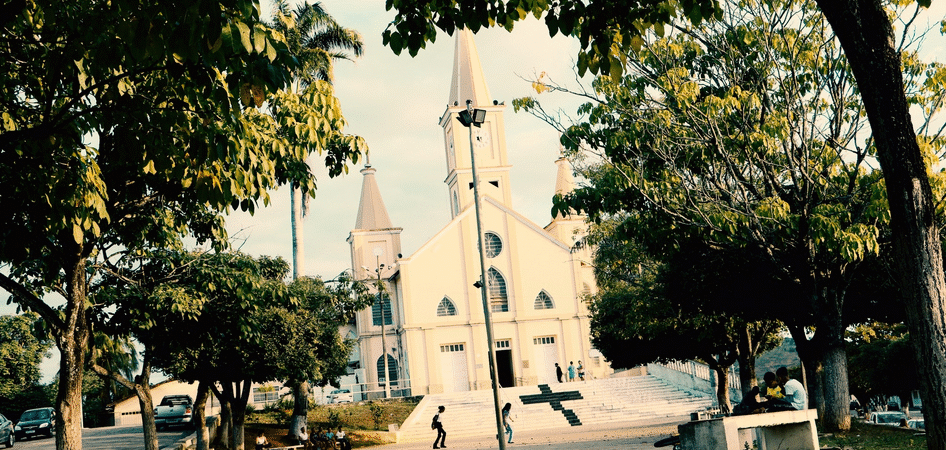
Learn about Águas Formosas, a regional hub in the Vale do Mucuri of Minas Gerais. Discover its history, its role as an agricultural and livestock center, and its natural attractions, such as the stunning Cachoeira da Zuada and the cultural traditions of the region.
Águas Formosas, which translates literally to “beautiful waters,” is a prominent municipality located in the Vale do Mucuri region in the northeast of Minas Gerais. The city, which serves as a regional center, is known for its relatively large population and its position as an important economic and cultural reference point, connecting Minas Gerais with the neighboring state of Bahia.
The municipality’s name is a slight alteration of the original settlement’s designation, Águas Belas (beautiful waters), given its formation in front of the mouth of the Córrego Águas Belas, a tributary of the Rio Pampã. The region is characterized by lush vegetation and a history marked by the meeting of different cultures.
History: from indigenous land to regional pole
The region of Águas Formosas was originally inhabited by the Machacalis indigenous people. The first white settlers arrived in the late 19th century, drawn by the fertility of the Vale do Pampã and, according to historical accounts, in search of the medicinal Toaia plant, while also fleeing the harsh droughts of Brazil’s Northeast.
Settlement and name changes
The nascent village was formed on the banks of the Rio Pampã and was initially called Águas Belas. Through administrative changes, it was first elevated to the district of São José do Pampan, then had its name changed several times (Pampan, São José das Águas Belas). The current name, Águas Formosas, was adopted when the municipality was created on December 17, 1938, officially becoming a political unit, having been dismembered from Teófilo Otoni.
Cultural identity
The city today functions as a regional hub, with a vibrant, albeit developing, local culture. There is a concerted effort to promote cultural projects involving music, dance, and theater, helping to preserve the traditions of the águas-formosense people, which are influenced by both the indigenous heritage and the sertanejo (inlander) roots of the settlers.
Economy and infrastructure: livestock and regional hub
The economy of Águas Formosas is mainly centered on the rural sector and its services.
Core economic activity
The economy is primarily based on pecuária (livestock and its derivatives). The region’s vast and fertile lands have historically been suitable for pasture, ensuring that agriculture and animal husbandry remain the foundation of the local economy.
Logistics and services
As a regional center, Águas Formosas offers necessary infrastructure and services to the surrounding smaller municipalities. It is connected to the state capital, Belo Horizonte, by the MG-105, and plays a crucial role in providing access to essential services and commerce for an estimated regional population of around 75,000 people.
Tourism and attractions: natural beauty
Although its primary function is as a service and agricultural center, Águas Formosas offers natural attractions that appeal to visitors seeking relaxation and contact with nature.
Waterfalls and natural sites
- Cachoeira da Zuada: This is one of the city’s main natural attractions. Formed by the Córrego Água Quente (hot water stream), this waterfall descends a valley floor, creating a beautiful and refreshing spot for contemplation, swimming, and ecological walks. It is located in the rural area, near the comunidade Água Quente.
- Cachoeira Véu da Noiva: Another recorded natural attraction, the véu da noiva (bridal veil) waterfalls are often characterized by a long, delicate drop of water.
Urban and cultural life
- Praça Minas Gerais: The main square, serving as the central leisure option where residents and visitors gather.
- Mercado Municipal Águas Belas: The municipal market is a focal point for local commerce and gastronomy, providing an opportunity to experience the daily life and regional products of the Vale do Mucuri.
- Religious sites: The city’s religious tradition is visible in sites like the Igreja Matriz de São Boaventura, whose historic bell is a protected cultural heritage asset.
Águas Formosas is a key city in the vast expanse of the northeastern corner of Minas Gerais. It represents a resilient community with deep ties to its land and water resources, offering a blend of rural economic strength, developing cultural life, and the refreshing beauty promised by its name: a place of beautiful waters.