
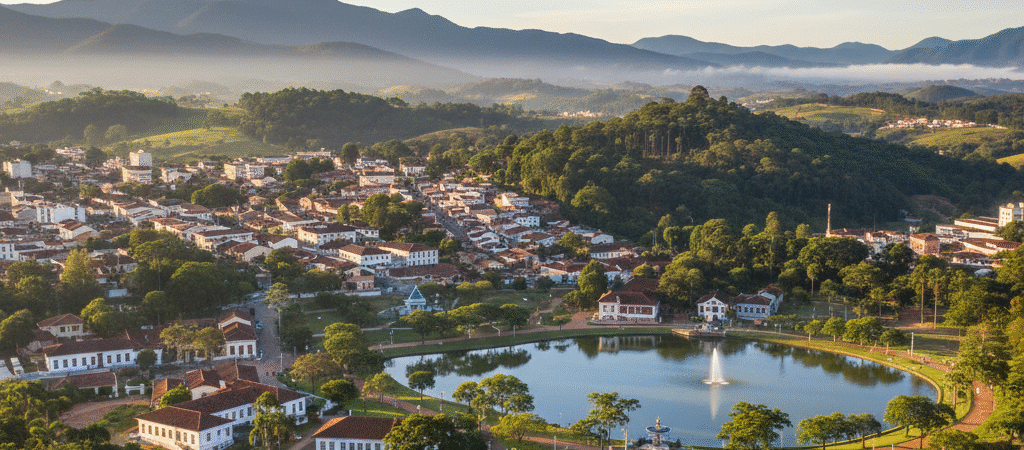
Caxambu is a charming town known for its mineral springs and serene atmosphere, combining natural beauty, history, and the healing spirit of Minas Gerais.
Arriving in Caxambu
As I entered Caxambu, I was immediately struck by how calm everything felt. The streets were lined with trees, the air smelled fresh, and the surrounding hills framed the town like a painting. Located in the south of Minas Gerais, Caxambu has been a destination for health and rest since the 19th century, thanks to its famous mineral waters that attract visitors from all over Brazil.
The town has an old-fashioned charm. Elegant hotels, thermal fountains, and tranquil squares give it the look and rhythm of another era. It’s the kind of place that invites you to slow down, walk without hurry, and simply enjoy the present moment.
The legendary mineral waters
The heart of Caxambu is the Caxambu Water Park, one of the largest hydro-mineral complexes in the world. I spent an entire morning exploring its paths, listening to the sound of fountains, and tasting the different types of mineral water that flow naturally from the ground. Each spring has its own composition and flavor — some are lightly sparkling, others more metallic or salty. Locals swear by their healing properties, and many visitors come daily to fill their bottles.
Inside the park, the Thermal Spa of Caxambu offers traditional baths, massages, and therapies that have been part of the city’s culture for generations. I tried a relaxing mineral bath, and the combination of warm water and silence was pure therapy.
The park itself is beautiful, with gardens, lakes, and historic fountains surrounded by imperial palm trees. The architecture of the pavilions reflects the elegance of early 20th-century Brazil, making every corner feel timeless.
A walk through history
Caxambu’s history is deeply connected to Brazil’s imperial past. During the 19th century, members of the royal family often visited the town for rest and treatment. The Princess Isabel Pavilion, inside the park, honors one of those visits and preserves objects and photos from that era. Walking through it, I could imagine the time when carriages arrived here carrying nobles seeking the same peace and well-being that still define the city today.
Outside the park, the Main Square and the Church of Saint Teresa are pleasant spots for a stroll. The church, simple and elegant, sits on a small hill overlooking the town. I stopped there for a few minutes to admire the view and the quiet rhythm of local life.
Exploring the surroundings
Caxambu is part of the Water Circuit of Minas Gerais, a group of towns famous for their mineral springs and mountain landscapes. It’s easy to take a day trip to nearby cities like São Lourenço or Baependi, each with its own character and attractions.
Just outside Caxambu, I found small trails leading to viewpoints with sweeping views of the Mantiqueira Mountains. The countryside is full of farms, rivers, and patches of forest, perfect for those who love photography or just want to breathe clean air.
Local food and hospitality
Like most of Minas Gerais, Caxambu has a rich culinary tradition. I had lunch at a small restaurant that served tutu de feijão, torresmo, and couve refogada, all cooked on a wood stove. Everything was simple and delicious. Later, I stopped at a local bakery to try pão de queijo and a cup of strong coffee — an unmissable duo in any Minas town.
The locals are warm and welcoming. Everyone I met seemed genuinely happy to help or share a story. There’s a calm friendliness in Caxambu that makes visitors feel at home from the very first day.
Conclusion
Caxambu is a place where time seems to flow as gently as its mineral springs. Between the therapeutic waters, the mountain scenery, and the slow rhythm of life, the city offers a kind of rest that goes beyond the physical — it’s emotional, even spiritual.
As I left, I felt refreshed, lighter, and somehow more balanced. Caxambu reminded me that healing doesn’t always come from medicine or modern comfort. Sometimes, it comes from a walk through a quiet park, a sip of mineral water, and the kindness of a small town in the mountains of Minas Gerais.