
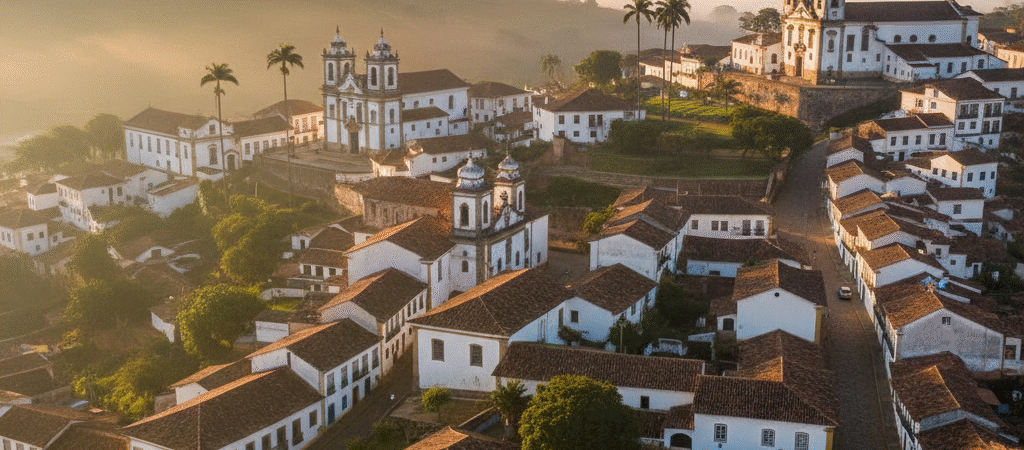
I traveled to Ouro Preto, a UNESCO World Heritage Site in Minas Gerais, and discovered a colonial town frozen in time — with golden churches, steep cobblestone streets, and stories that echo Brazil’s baroque soul.
Ouro Preto: where Brazil’s past still breathes
When I first arrived in Ouro Preto, it felt like stepping into a painting. The hills rose like waves of stone, each crowned with a church that glittered under the sun. The streets were so steep that walking them felt like a pilgrimage — and, in a way, it was. Ouro Preto isn’t just a city; it’s a living museum, a preserved fragment of Brazil’s colonial past that still beats with the rhythm of today.
Getting lost in history
Ouro Preto was once the beating heart of Brazil’s gold rush during the 18th century. Its name literally means “black gold,” a reference to the dark iron oxide that coated the gold extracted from the region’s mountains. Walking through its narrow alleys, I could almost hear the echoes of miners, priests, and revolutionaries who once shaped Brazil’s destiny.
The town is also known for the Inconfidência Mineira, a failed movement for independence led by the national hero Tiradentes. Visiting the Museu da Inconfidência, located in the old city hall, gave me chills — seeing artifacts from that era reminded me that Ouro Preto isn’t just a postcard but a symbol of resistance and dreams.
The magic of baroque art
Every church in Ouro Preto is a masterpiece. The Igreja de São Francisco de Assis, designed by the legendary Aleijadinho, stands as a symbol of Brazil’s baroque genius. Its sculpted angels, golden altars, and ceiling paintings by Manoel da Costa Ataíde seem to glow even in the dim light of candles.
I spent hours just admiring the details — how every cherub, every column, tells a story of devotion and art. It’s not just religious beauty; it’s the power of human creativity transforming faith into architecture.
If you love art and history, Ouro Preto is a dream. Every corner is filled with carvings, fountains, and façades that blend faith and rebellion, elegance and endurance.
Walking the steep cobblestone streets
Ouro Preto is famous for its slopes, and my legs quickly learned that fact. But every climb rewarded me with views that took my breath away. Looking down from Rua Direita, I could see the rooftops cascading like red waves, framed by the green mountains of Minas Gerais.
Small cafés and craft shops line the streets, each offering something unique — from handmade jewelry and soapstone sculptures to warm pão de queijo and strong Brazilian coffee. The blend of sounds, smells, and colors made every step feel like a sensory journey.
Where to stay and what to eat
I stayed in a charming pousada near the Praça Tiradentes, where mornings began with the scent of freshly baked cheese bread and a panoramic view of the city’s churches. It’s the perfect spot to start your day, especially if you like to explore on foot.
For food, I couldn’t resist trying feijão tropeiro, tutu à mineira, and doce de leite, all local specialties. The cuisine of Minas Gerais is comfort food at its finest — hearty, flavorful, and made to be shared.
A city that lives in layers
Ouro Preto is more than just architecture and history. It’s a city layered with art, rebellion, religion, and resilience. Every balcony, every bell tower, every shadow seems to whisper the stories of those who came before.
At night, when the churches light up and the air cools down, the town feels both haunted and holy — a reminder that beauty often grows out of struggle.
Conclusion: a timeless encounter
Leaving Ouro Preto was like waking from a beautiful dream. I realized that this city isn’t only about the past; it’s about how the past still lives among us — in art, in stone, in silence.
If you’re looking for a place that captures the essence of Brazil’s history and soul, Ouro Preto is where you’ll find it. A city built on gold, yet rich in something far more lasting: the human spirit.